
Losing teeth changes everything: the way you eat, your facial structure, the way you talk, and even how you feel about yourself. If you’re weighing up the options of mouth dental implants and dentures, you’re not just choosing a product; you’re also going to have to live with the daily routine that comes with it.
Most people don’t need to have a “dental implants versus dentures” battle to make a good decision regarding their oral health. There’s a practical middle ground that is more often than not going to fit your budget and your lifestyle. This isn’t about a diagnosis, but it might just help you ask the right questions.
If you’re planning to travel for care, places like Medify can help you compare pre-vetted clinics and get a clearer write-up of what treatment to expect beforehand.
Conventional Dentures vs Implants vs Implant-Supported Dentures
The best way to make a decision is to think about how ‘real’ you want your teeth to feel, how much daily cleaning effort you can cope with, and whether you’re open to a procedure. Dental implants are a preferred solution for missing teeth by many patients and clinicians because dentures generally need to be replaced, relined, or adjusted every three to four years due to changes in the jawbone and gums over time.
| Option | Best for | Stability when you chew | Maintenance feel | Typical timeline feel |
| Traditional dentures (full or partial) | Fast, non-surgical tooth replacement | Can shift, especially lowers | Remove to clean; may need relines | Quick start, frequent adjustments |
| Dental implants (single or multiple) | Replacing roots for a natural feel | Very stable once healed | Brush like teeth | Longer start, long-term steady |
| Implant-supported dentures (snap-in or fixed) | More stability without “all implants.” | Much steadier than traditional | Removable or fixed cleaning | Medium timeline, planned visits |
Traditional Dentures (AKA Artificial Teeth): What They Do Well And What They Don’t.
Traditional dentures are removable teeth that just sit on your gums. The big plus is that they are quick to put in after extractions and don’t need surgery. They can get you looking and feeling a lot better while you work out a longer-term solution.
But some downsides are pretty typical. Some people get sore spots, take time to get used to speaking again, and suffer from a bit of a fit adjustment over time as the mouth heals and changes. Lower dentures can feel a bit wobbly because your tongue and the floor of the mouth are always moving.
Dental Implant Surgery: What Is There To It?

First, let’s go over what Dental Implants are.
Dental implants are titanium posts that are surgically placed into the jawbone to act as strong, stable replacements for missing tooth roots. They support a crown, bridge, or full set of teeth. That’s why implants often feel more like natural teeth when you bite and chew.
Of course, implants are not an instant solution: you’ll need to get some imaging done, have a plan drawn up, get actual dental implant surgery, and then wait for it all to heal over a period of months, especially if you have considerable bone loss; in that case, you’ll need some bone grafting done. But the upside is long-term stability and a solution that doesn’t come out at night. In case bone grafts are actually necessary, then, after osseointegration is complete, a minor surgery may be needed to place the abutment, which is the piece where the crown eventually attaches.
Also, dental implant surgery poses some health risks, but these risks are usually minor and easily treated when they occur.
Implant-Supported Dentures: The Middle Ground That Many People Want
All-on-4 is an excellent Tooth replacement option if a patient requires Full-Mouth Dental Implants.
Implant-supported dentures combine implants with a denture-style prosthesis so that your teeth don’t just rely on gum suction. The goal is to get a bit more stability without having to replace every single tooth with an individual implant.
Snap-in overdentures “click” onto implants and are removable for cleaning. A lot of people like that they’re simple to clean at home, but still get a big improvement in grip over traditional dentures.
Fixed implant dentures, often called hybrids, stay in place and are cleaned like a bridge, using brushing and tools to clean underneath. They can feel like the most ‘set and forget’ option, but they do need daily technique and consistency.
Where does All-on-4 fit into all this? All-on-4 is one fixed full-arch approach that uses just four dental implants to support a full set of replacement teeth. What you need is the right design for your anatomy, your bite, and your risk factors, not just the brand-style name.
The Day-to-Day Differences That Actually Matter
When people say they want “the best option”, they usually mean the one that feels reliable on a normal Tuesday. These are the daily-life differences that end up mattering the most:
- Chewing and confidence: Dentures can work just fine, but you might have to be a bit more careful when it comes to tougher foods. Implant-based options tend to feel steadier once they’ve all healed.
- Taste and bulk: Upper dentures can cover part of the palate, which some people get used to, but others don’t. Implant designs can help reduce bulk.
- Bone changes over time: Dentures don’t replace natural tooth roots, so they don’t provide the same jawbone stimulation. This can affect long-term fit.
- Cleaning reality: Removable dentures are easy to chuck out and scrub. Fixed implant teeth stay in place, but you need to clean underneath them every day.
A Simple Decision Checklist: 7 Questions to Ask Yourself
If you’re struggling to make up your mind, don’t try to figure out every outcome. Just use a short shortlist of questions to match up the option that’s best for you, and then ask your dentist to walk through your answers with your imaging.
- How permanent do you want this to feel?
- Are you up for surgery and the recovery time that comes with it?
- What does your imaging say about your bone and gum health?
- Do you clench or grind much, and would you wear a night guard if needed?
- What kind of maintenance person are you: do you remove and clean, or clean underneath?
- What matters more right now: speed or feeling like you’re chewing like a normal person?
- What does ‘affordable’ mean to you over the years, including repairs, relines, and replacements?
Timeline and Number of Visits: What to Expect.
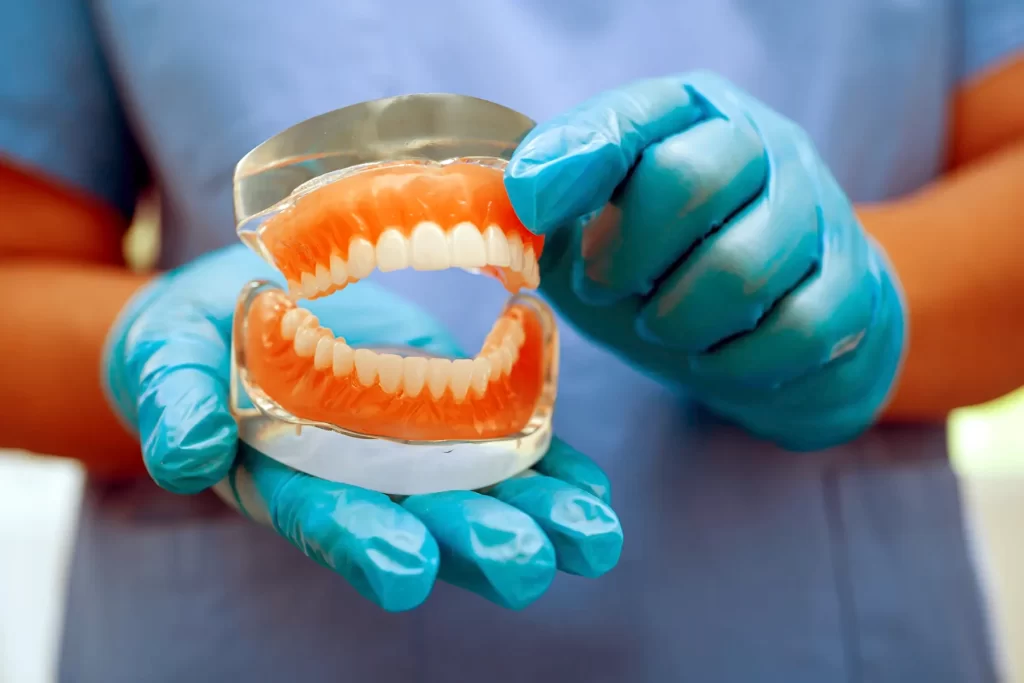
Dentures: faster, but not always best.
Records get taken, you get a try-in, the dentures are delivered, and then come the adjustments. It’s a shame, but the real finish line is being able to wear them comfortably, not having that one perfect appointment right out the gate. Expect a settling-in period where a few tiny tweaks improve the fit.
Implants and dentures supported by implants add a whole extra layer: imaging, creating a written plan, placing the implants, healing time, and then the final denture. Some patients do use temporary teeth during healing; it all depends on how stable things are and how the dentist thinks of it. If you’ve got a trip lined up, ask about how many visits are needed on-site and what can be handled virtually right off the bat.
You may need pain medicines or antibiotics after dental implant surgery, and you should contact your surgeon if any problems worsen.
The True Costs and Long-term Value: What “Cheap” Really Means
Dentures usually are lower upfront, but they may need re-lining or replacement as your mouth changes over time. Dental implants can last a lifetime with proper care, making them a more cost-effective solution in the long run. The best way to compare the two is by looking at the total value over time, not just the first quote.
When you are comparing prices, you want to compare the clinical plan, the materials, what is included, and what happens if adjustments or maintenance are needed later down the road. A low price up front that leaves out some key steps can turn into a whole lot more expensive fast if you need some of that redo work or repairs down the line.
Safety, Materials, and Standards: Make Sure to Verify
No matter where you go, good decisions are based on good documentation. You want a written roadmap and to have all your questions answered in a way that you can understand, so you can verify the essentials before you commit.
- Ask about what planning and imaging are involved, including 3D imaging when it applies, a bite evaluation, and a written treatment plan.
- Ask which implant system they use and what the final teeth are made of, since that can affect weight, repairs, and wear.
- Ask about how they sterilize and handle infection control.
- Ask what the warranty covers, for how long, and what happens if you need some help after you head back home.
Planning Care in Mexico with Medify
Medify helps patients from the U.S. and Canada compare pre-vetted partner clinics in Mexico with clearer communication and support in both languages. It can help you figure out what your options are, and even work out some of the travel logistics before you commit to putting everything into a specific plan.
Medify is usually focused on Los Algodones and Tijuana. Los Algodones is a compact place that’s pretty easy to walk around, which makes it perfect for making some quick scheduling decisions, while Tijuana is a bigger city with lots of modern clinics and is pretty easy for people from Southern California to get to. The savings can be pretty significant, but no matter where you go, the key thing is the same: take all the time you need to verify the plan, imaging, materials, and follow-up expectations in writing.
Get a Free Quote
If you’re trying to figure out which way to go, dentures, dental implants, or implant-supported dentures, then start with a clear conversation about what you want. Medify can help you figure out the options, get a handle on the materials and timeline,s and sort out the next steps with some vetted clinics in Los Algodones or Tijuana for some more confident decision-making.
