
When you’re missing teeth, the first thing on your mind is usually “how am I going to go about living with this?” Not “what’s the best tooth replacement option?” It’s all about getting your life back to normal without your natural teeth, and that’s why your choice really matters.
Both can be excellent solutions to improve oral health, but it all comes down to one thing: a bridge is fixed and depends on your remaining natural teeth, and dentures are removable, also dentures are generally more affordable than dental bridges, and that’s the real difference-maker.
Dentures vs Bridges: Key Differences
| Feature | Dental bridge (fixed) | Dentures (removable) |
| Best for | One or a few missing teeth in one area | Several missing teeth or a full-arch replacement |
| Support | Anchored to neighboring teeth | Supported by gums and/or remaining teeth |
| Daily feel | Often feels more “like teeth.” | Can feel bulkier at first |
| Cleaning | Clean around and under it | Remove to clean; soak/brush as directed |
| Typical upkeep | Strong hygiene habits | Adjustments and occasional relines |
Dental Bridges: How They Work & Why They’re So Popular for missing teeth restoration.
Dental bridges offer a more permanent solution with better stability and functionality compared to dentures.
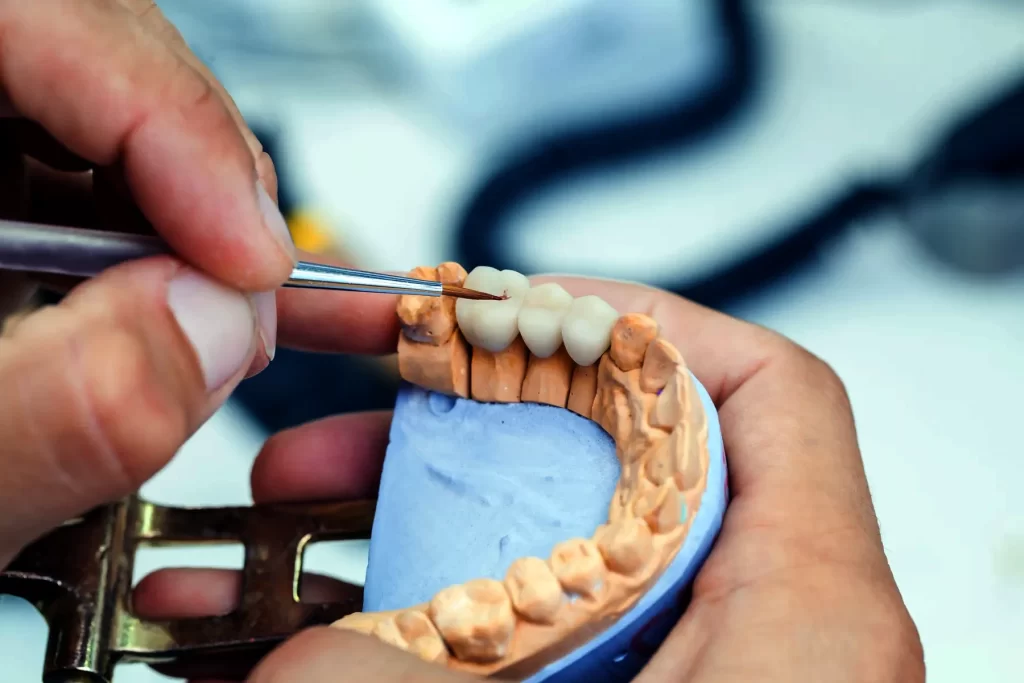
A dental bridge uses the two adjacent teeth next to the gap as anchors, replacing missing teeth. Two dental crowns are placed on those teeth, and the replacement tooth in the middle is called a pontic, which basically creates a fixed replacement for a missing tooth.
Because it’s cemented in place, you don’t need to take it out. Many people like the stability it provides when eating, especially if they want something that feels as close to natural teeth as possible. Also, dental bridges can last 10–15 years with proper maintenance, while dentures typically last 5–7 years.
The Different Types of Dental Bridges & Materials You’ll Find
Most bridges have two anchors on either side of the gap. You might hear about materials like porcelain fused to metal (PFM) or zirconia, but what really matters is how well it fits and how it balances with your bite.
What matters most is how well the bridge fits, how the bite is balanced, and the quality of the work done in the lab. A good plan also considers what’s happening at the gumline and under the pontic; this is key to long-term gum health.
What to Consider Before You Decide On a Bridge
A bridge relies on the health of the two teeth it’s anchored to. If those teeth have gum disease, cracks, or big restorations, the plan might need to change, which raises the risk to the supporting teeth.
Cleaning around a bridge is a bit more of a challenge. You need to remove plaque from around the edges and under the pontic.
The overall treatment process for dental bridges can take days to months, depending on the individual case.
Dentures or “False Teeth”, A Removable Alternative

Dentures are prosthetic teeth that can be taken out. Complete dentures replace an entire arch, while partial dentures replace several teeth and use the remaining adjacent natural teeth for extra support, creating a removable option that still feels natural. Dentures can improve chewing ability and speech, enhancing overall quality of life.
Getting Used to Dentures, The First Week
Dentures can feel a bit weird at first, and that’s perfectly normal. Mild sore spots and small changes to speech are common during the adjustment period, but a few tweaks and adjustments usually make all the difference.
The key to comfort is less about “perfect materials” and more about getting the bite design just right, and making sure the denture fits properly. If the bite feels off or the pressure is uneven, it can irritate the tissues and make you feel self-conscious, which is a fit-driven experience.
Adjusting to Dentures: How to Keep Them Feeling Secure
As your gums and bone change over time, your dentures can start to loosen. A reline updates the fit so the denture sits more securely, which is key to long-term stability.
The important thing is to schedule follow-ups early. Fixing any rubbing or discomfort early on will prevent it from causing pain later, and it can stop you from “just learning to live with it”, which protects your oral comfort.
Deciding Between Bridges and Dentures: What’s Most Important
If you’re trying to decide, focus on how it will affect your daily life and long-term health, rather than just the best possible outcome.
Start by considering how many teeth you’re missing and where they are. A single gap might suggest a bridge, while several gaps might point towards a partial or full denture. Next, think about the condition of the teeth next to the gap, since a bridge relies on these teeth for support, weak or damaged teeth can increase the risk, and maybe even rule it out as an option.
Think about your routine. Do you think you’d be comfortable cleaning around a fixed bridge, or do you think it would be easier with a removable denture? And lastly, do you have any plans for dental implants in the future, which can affect whether or not you choose to go with a bridge or a denture?
If you’re considering treatment in Mexico, you should probably ask about imaging, materials, lab quality, and aftercare. Working with a service like Medify can really help you connect with a good clinic and get clear guidance, even if you don’t speak the same language.
5 Questions to Help You Decide Between Dentures and Bridges
Choosing between dentures and bridges is really just about fit, not the hype. Run through these questions, then take them to a dentist for a check-up, and it will make your decision a whole lot easier.
- How many teeth are missing, and are they all clustered together?
- Are the teeth next to the gap healthy enough to support a bridge?
- Do you want the stability of a fixed bridge or the flexibility of a removable denture?
- Which maintenance routine do you think you’ll actually stick to?
- Is this the final plan, or just a step towards dental implants later on?
The Cost of Dentures and Bridges: What Affects the Price
Price isn’t just about the denture or bridge itself. It’s also influenced by the materials, the lab work, the prep work on the supporting teeth, and the aftercare support, which is what really gives you the real value.
The Cost Drivers for Dental Bridges
Bridges vary depending on the number of units, the material used, and the quality of the lab work. Prep work on the supporting teeth can also add to the cost, so make sure to ask what’s included in the price. Gathering All the Details, Imaging, First Visits, and Follow-Ups
Ask about imaging and whether any temporaries will be needed. Also, don’t be afraid to ask about follow-up visits. Knowing what’s bundled will help you compare quotes without getting any nasty surprises, which can really throw a wrench in your budget planning.
Breaking Down Denture Cost Drivers
Denture prices can vary depending on whether you’re looking at full or partial dentures, the base materials used, and just how many fit checks are needed during the process. You might need to make some adjustments once you get your new dentures home, and then there’s the possibility of needing a reline later on as your fit changes, all of which adds up and should be factored into your realistic maintenance costs.
Price Context, Just Examples from Medify
Medify posts price tables to give you a sense of what to expect when it comes to comparing options before you even start traveling. For example, it’s Los Algodones pricing lists per-arch dentures starting around $480, and a 3-unit porcelain-fused-to-metal bridge starting around $540, but those prices may not be the same tomorrow.
Your final bill will depend on what your dentist finds during your exam, the materials they decide to use, and just how complicated the whole process turns out to be. So make sure to get an itemized quote so you know exactly what you’re getting and what you’re not, which should give you pretty transparent expectations.
Planning and Follow-Ups, Especially if You’re Traveling for Oral Health
Planning is key when it comes to any kind of dental treatment. A clear timeline can really help to cut down on stress and make sure everything goes smoothly, which should make for a whole lot smarter travel scheduling.
What You Can Expect at Your Appointments
A bridge usually involves a consultation with imaging, the prep work on your teeth, and then either a scan or an impression. After that, you’ll head back to seat the final bridge once the lab work is ready, all of which should be managed to get the lab work right the first time.
Dentures might involve impressions, a try-in at the dentist, a delivery date, and then a few follow-ups to remove any sore spots and get the fit just right. The number of visits will depend on whether or not extractions or immediate dentures are involved, and that can really affect the timing.
How Medify Can Help You Compare Options in Mexico

Medify helps US and Canadian patients connect with pre-vetted clinics and get a clearer understanding of what’s involved. You also get bilingual support, so you can ask questions and get aftercare without any confusion, which should give you a much clearer picture of what’s going on.
A Free Virtual Diagnostic can help you figure out if bridges and dentures make sense for your smile before you even start traveling. It can also help you get an itemized quote that matches your needs, which should make for a whole lot better planning.
Want a clear comparison for your specific smile? Start with Medify’s Free Virtual Diagnostic, then request an itemized quote from a vetted clinic in Los Algodones or Tijuana, which should give you a plan that actually makes sense.
Get Your Free Quote. You can request a quote, see prices, or ask questions about travel and shuttle support, which should help you move forward with a whole lot less uncertainty.
